Reefs vs. Climate Change
Are you interested in coral reefs? Read my first blog post to learn more about them and what is being done in the fight against climate change.
Climate change is such a large and controversial topic today that even the most uninterested citizen understands at least some of its effects on the environment. The majority of the climate change that is observed today is a result of the overabundance of Carbon Dioxide (CO2) released into the atmosphere. In fact, there has been a 40% increase in CO2 in the atmosphere since the industrial revolution, nearly 200 years ago! This drastic rise affects nearly all of Earth’s natural systems, including ocean pH. The ocean is a natural sink for Carbon Dioxide, so the more CO2 in the atmosphere, the more CO2 in the ocean, thus increasing the water’s acidity. This leads to a phenomenon called ocean acidification. As marine organisms have adapted to survive in their environment over millions of years, the rapid change ocean acidification causes alter many organisms’ abilities to survive in their own ecosystems. Among the multitude of creatures that are endangered by this process are corals and animals that live in coral communities.
The extreme toll that a changing pH takes on corals can be explained by their anatomy. Corals are made of bicarbonate material. In essence, they rely on the availability of carbonate ions in the ocean. When carbon dioxide dissolves, chemical reactions occur that reduce the number of ions that corals rely on for their survival . Click here for more information about how corals develop. The results of this are devastating for the corals and the organisms affected by their existence. Ocean acidification leads to coral bleaching, weak coral skeletons, death, and a loss of biodiversity. Understanding this, I am particularly interested in studying these effects and possible solutions to this issue. Though the problem could be solved through the removal of the excess Carbon Dioxide in the atmosphere, the ecosystems that are in jeopardy may not have that long before they are eradicated forever. Several ideas for this issue have been proposed.
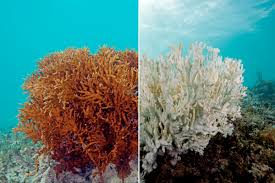
Richard Vevers/The Ocean Agency
The implantation of coral larvae in dying coral reefs has been executed in hopes that the reefs would be revived. This is occurring on a large scale in Australia’s Great Barrier Reef. “Baby” corals are grown in a laboratory and strategically implanted so they grow to replace the dying corals around them. Dr. David Wachenfeld, a head scientist on the project, says that it is a natural way to bring about a rebirth of coral reefs. My intention in the future is to join a project such as this to help combat the effects of ocean acidification on reefs. Even small things like studying coral anatomy and understanding the ecology of these areas interest me because this information is essential to understand if we ever want to come up with new ways to protect and revive them. I think innovative projects such as this one are the key to keeping coral reef ecosystems alive and healthy.
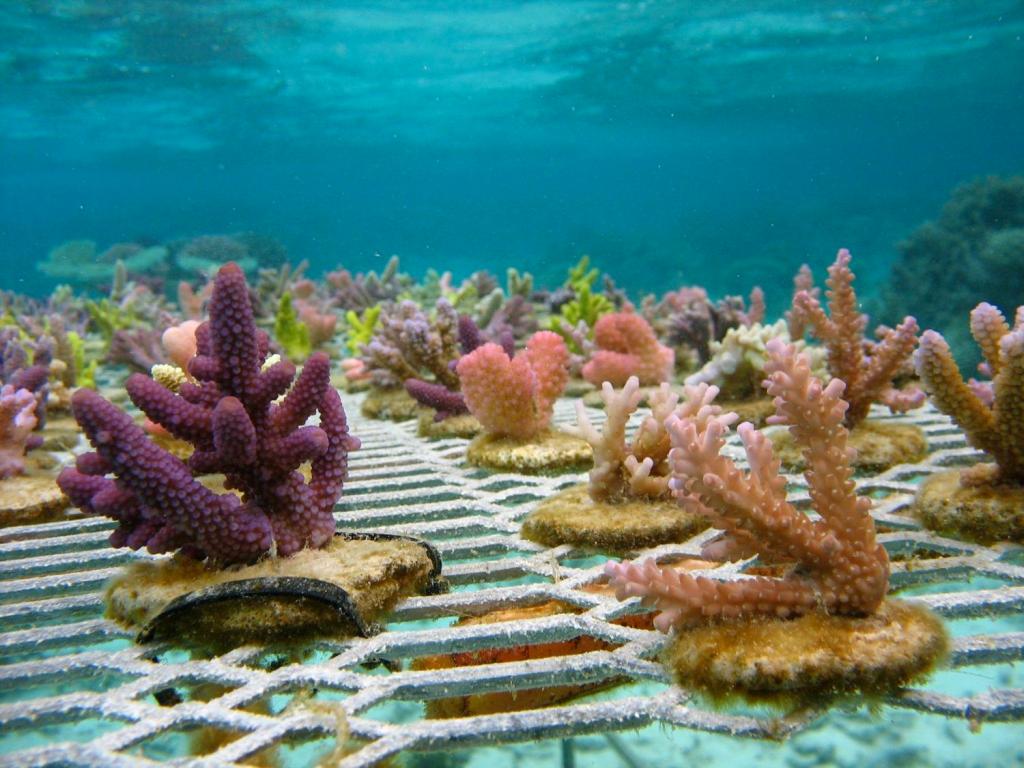
Smithsonian
 Ayanna's Blog